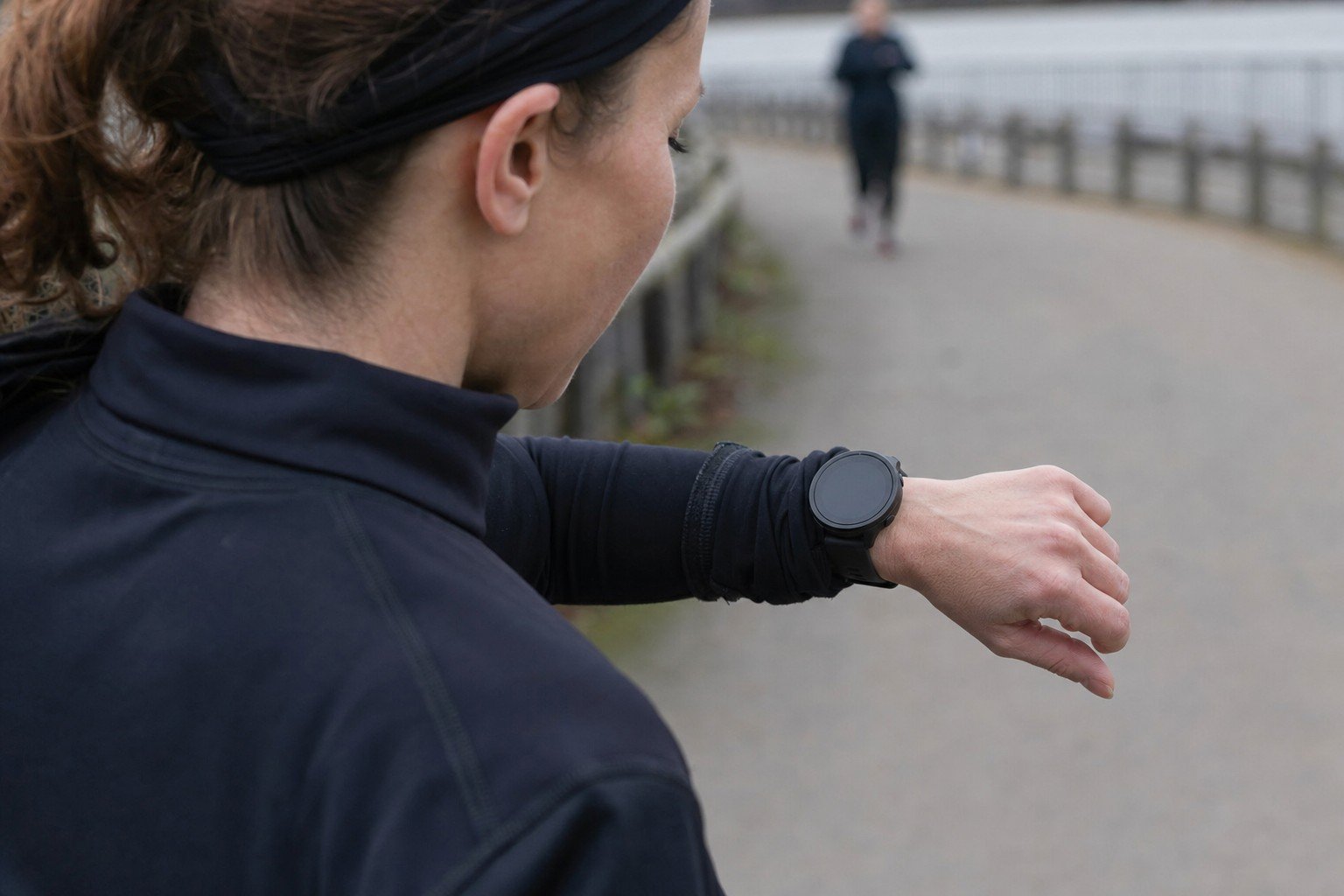
What Actually Matters in a Running Watch, and What You Can Ignore
A fitness tracker or running watch is one of the first things runners are tempted to buy, and one of the easiest to overspend on.
The marketing leans hard on features, most of which you will never use.
A watch is optional. Effort and breathing tell you most of what you need to know. But once you start building distance, a few features earn their place.
What a running watch is actually for
A watch answers two questions: how far, and how long. That is the part that genuinely helps as your runs get longer, because it lets you build distance in a controlled way rather than guessing.
Older trackers like the Fitbit Charge series proved how popular the basics are: step counts, heart rate, and a record of your activity. Modern running watches do the same things, usually with GPS built in.
Keeping your easy runs honest is the useful job for a runner stepping up in distance. It is very easy to drift faster than you should, and a watch makes that drift visible.
The features worth paying for
Spend on the things you will use on every run, not the ones that sound impressive in a list. For most recreational runners, that means:
- GPS distance and pace, so you can build from 5K to 10K at a measured rate.
- Heart rate, useful mainly as a rough check that your easy runs really are easy.
- Battery life that comfortably covers your longest run with room to spare.
- A clear, readable screen you can glance at mid-stride without stopping.
That is genuinely most of it.
If you want to compare GPS running watches on Amazon UK, those four things are the list worth shopping against.
The features you can mostly ignore
Recovery scores, training-readiness numbers, and the rest are nice to have, not need to have. They can be motivating, but none of them is the reason anyone improves.
No watch makes you a better runner. It just shows you what you already did. The running is what counts.
Treat the fancier metrics as entertainment. The data that matters is whether you ran, how far, and whether the easy days stayed easy.
Do you even need one?
Plenty of runners progress for years with nothing but a phone and a sense of effort.
If a watch helps you stay consistent and pace yourself sensibly, it is money well spent. If it turns every run into a numbers game you start to dread, it is not.
The most useful record is often the simplest. A watch can feed it, but a plain training log of distance and how you felt does the real work of showing whether you are improving.
Buy the watch for the basics, ignore the noise, and let the running speak for itself.