Why Runners Who Lift Get Injured Less, and Run More Easily
Ask most runners how to get better at running and the answer is simple: run more.
Strength work feels like a distraction, or something for other sports.
The evidence points the other way, and it is unusually strong.
A review of randomised trials found that strength training cut overuse injuries by close to half. Stretching, the thing many runners reach for instead, did nothing measurable.
Two sessions a week is the best-supported thing most runners never do.
Strength training, not stretching, lowers injuries

The clearest evidence comes from a 2014 analysis in the British Journal of Sports Medicine. It pooled the best available trials on preventing sports injuries.
Strength training came out on top.
Across the studies it reduced overall injuries to less than a third. It cut overuse injuries, the repetitive-strain problems that sideline most runners, by almost half.
Stretching, the habit runners reach for first, showed no measurable effect on injury rates. Strength training nearly halved them.
Strength was the single most effective measure they tested.
The effect also scaled. The more strength work people did, within reason, the fewer injuries they tended to pick up.
This is general information, not medical advice. If you are coming back from an injury or have a health condition, get a GP or physiotherapist to point you at a sensible starting load.
It also makes your running more economical
Fewer injuries would be reason enough. Strength training does something else that matters just as much.
A 2018 systematic review in Sports Medicine gathered the studies on running economy, which is how much energy you burn to hold a given pace.
Most of the trials showed economy improving by somewhere between 2 and 8 per cent.
A more economical stride means the same pace costs you less.
Run more efficiently and a steady effort carries you further before fatigue sets in. That is exactly what you want when you are adding distance.
You feel it where it counts. The last kilometre of a long run, when tired legs start to wobble and every step costs more, is where a stronger, springier stride holds together.
Why it will not make you slow or bulky
The usual worry is that lifting adds muscle you then have to haul around. For a runner training the way runners do, that is not what happens.
The lifting that helps running is heavy and brief.
A few hard repetitions, not the high-rep sessions that chase a pump and build size. Stacked on top of your running, it develops force and tendon stiffness far more than bulk.
What it looks like in practice is modest:
- Two short sessions a week, kept well away from your hard runs.
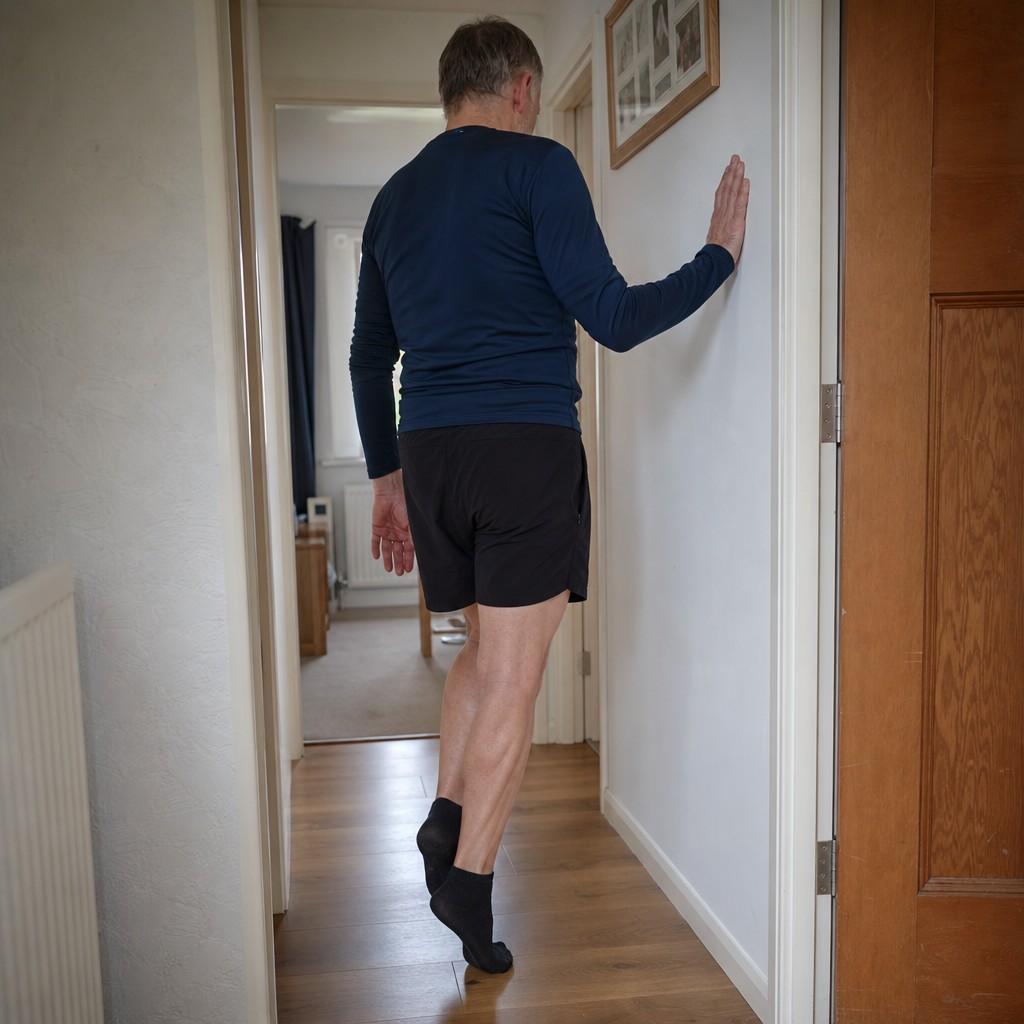
- A handful of compound moves: squats, lunges, a hip hinge, calf raises, and something on one leg.
- Heavy enough to be tough for five to eight repetitions, not endless light ones.
- Built up gradually, on the same easy-does-it principle as your mileage.
What to actually do
You do not need a gym membership or a programme to buy. A few basic lifts, done consistently, is the whole game.
Start with bodyweight, then add load.
Squats, lunges, calf raises, and single-leg work expose the weak links that running alone never strengthens. When those feel easy, reach for more.
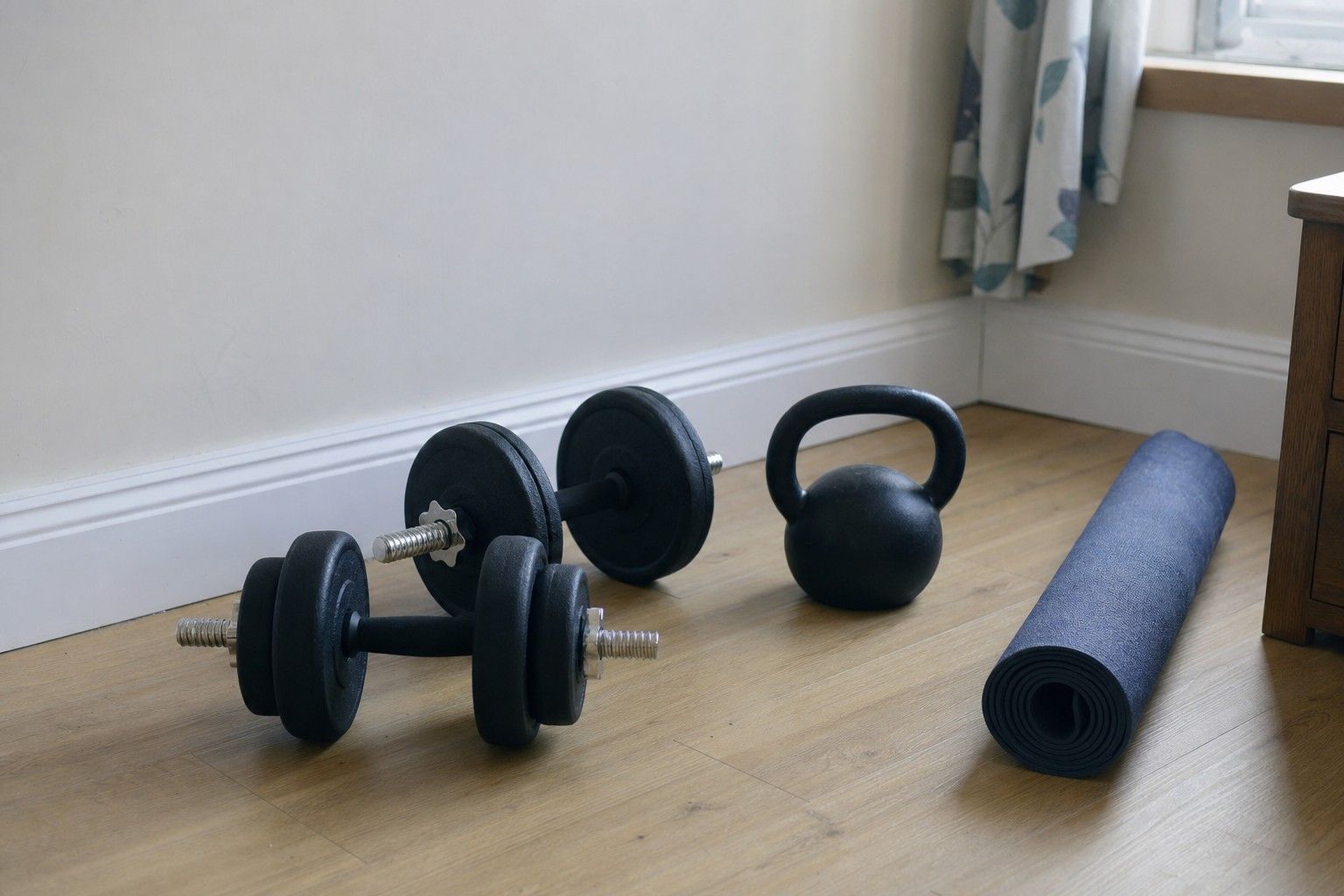
A pair of adjustable dumbbells or a set of resistance bands on Amazon UK is plenty to progress for a long time.
Keep the lifting short and well-timed. Twenty minutes twice a week, after an easy run or on its own day, never the day before a hard effort or a race.
It matters more the longer you have run.
From your forties on, muscle power slips away a little each year unless you train it. Lifting is the most direct way to hold on to it.
If your running has gone flat, strength is one of the most overlooked levers to pull. It is worth treating it as the single variable you change rather than simply running more.
It also builds the durability that lets you add distance from 5K to 10K without your legs falling apart.
Strong runners are not bulky runners. They are durable, efficient ones.
Two sessions a week, a few honest lifts, and a bit of patience is the rare addition that makes you both harder to injure and lighter on your feet.
Most runners skip it. The ones who do not tend to keep running while everyone else is nursing a niggle.