
How to Run When You Do Not Feel Like It
It is a grey morning, the bed is warm, and the run you planned feels like the last thing you want to do.
Every runner knows that feeling.
The ones who keep improving are not the ones who feel it less. They are the ones who have stopped waiting for it to pass.
Consistency is the quiet engine behind almost all running progress. The problem is that motivation, the thing we assume gets us out the door, is unreliable by nature.
The trick is to stop depending on it.
Motivation is not what gets you out the door

For most runs, motivation follows action rather than leading it. You do not feel like running, you go anyway, and a few minutes in the reluctance fades.
Waiting to feel motivated first gets the order backwards.
This is why habit matters more than enthusiasm. A run that is simply what you do on a Tuesday morning does not need a pep talk. It just needs to be the default.
The runners who stay consistent are rarely more disciplined than everyone else. They have just made running the path of least resistance on the days it counts.
Lower the bar instead of skipping
On a bad-motivation day, shrink the run rather than cancel it.
Tell yourself you will put your kit on and run easy for ten minutes, and that you can stop after that with a clear conscience.
Most of the time you will keep going once you are out. The hard part was never the run. It was the starting.
The deal is simple: kit on, ten easy minutes, and you are allowed to stop. You rarely will.
Even on the days you do stop at ten minutes, you have kept the habit alive. A short run beats a skipped run every single time, because the streak is worth more than any one session.
Make the decision the night before
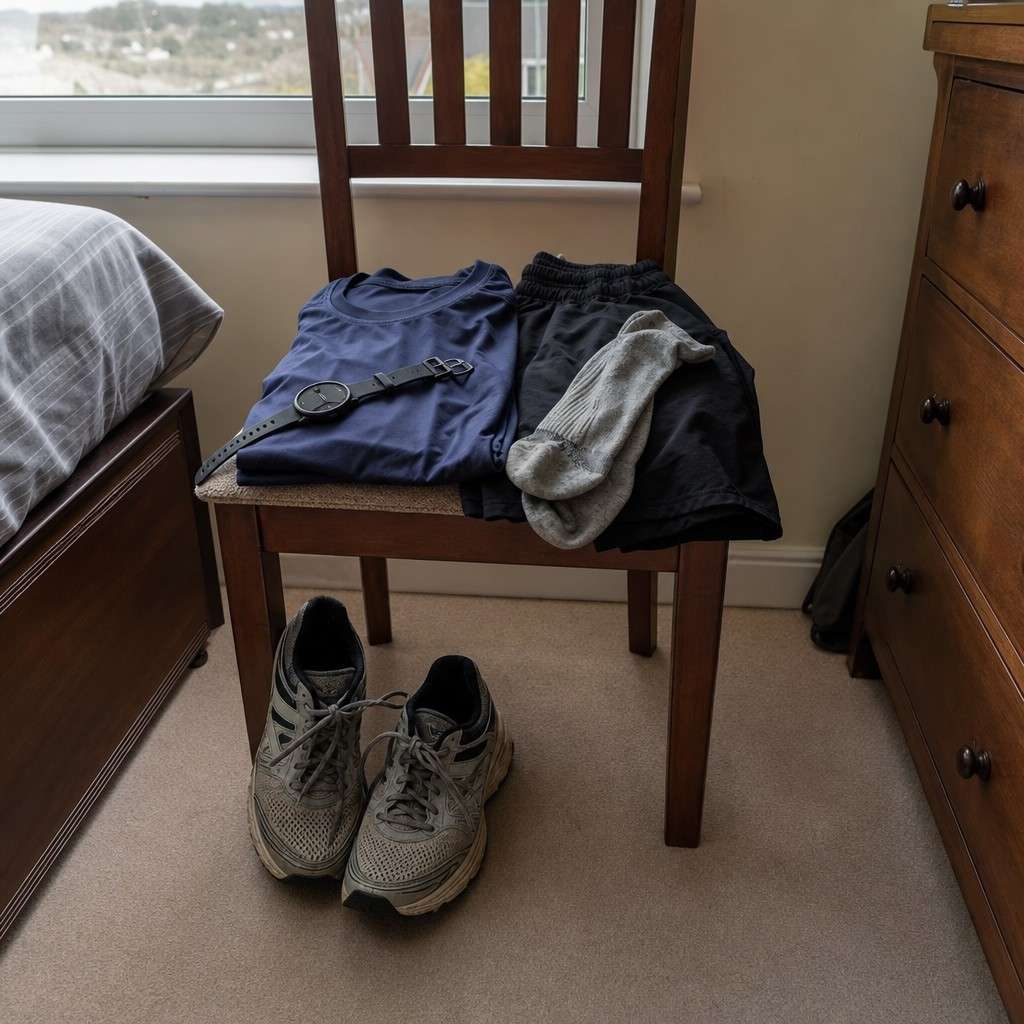
Every run you have to argue yourself into is a run you might lose.
The fix is to remove the daily negotiation.
Decide the night before when you are running and where you are going. Lay your kit out. Take the choice out of the tired morning version of you, who is not to be trusted with it.
The fewer decisions standing between you and the front door, the more often you walk through it. Routine does the work that willpower cannot keep up.
Tell apart “can’t be bothered” from “need to rest”
Not wanting to run and needing to rest are different things. It is worth being honest about which one you are facing.
Low motivation usually lifts once you start. Genuine tiredness does not.
If your legs feel heavy for days, your sleep is poor, or a run that is normally easy suddenly feels desperately hard, that is your body asking for rest, not a pep talk. Pushing through real fatigue is how niggles and burnout start.
This is general information, not medical advice. Persistent exhaustion, or feeling unwell rather than just unmotivated, is worth a word with your GP before you train through it.
Reluctance you can usually run through. Fatigue you should respect.
Let a missed run be a missed run
One skipped run is nothing. Treating it as the end of the plan is the real damage.
Life gets in the way, and a missed Tuesday does not undo weeks of work.
The runners who fall away are rarely the ones who miss a session. They are the ones who decide that missing it means they have failed, and quietly stop.
Three steady runs a week for a year beats a perfect fortnight followed by giving up.
If the runs themselves have started to feel stale, that flatness is often a sign your routine needs one change rather than more willpower.
Track the habit, gently
Seeing the run pile up is its own quiet motivation.
A simple record of what you did, even just a tick for each run, turns consistency into something you can see and want to protect.
There is no need to grade yourself. A plain training log that shows three runs most weeks tells you the only thing that really matters: you are still going.
The aim is not a flawless record. It is a long, slightly untidy one.
What actually keeps runners going
The runners who last are not the most motivated. They are the most consistent.
They have made running small, routine, and hard to skip, and they have stopped expecting to feel like it every time.
Do that, and motivation stops being the thing you wait for. It becomes a nice bonus on the days it shows up, and beside the point on the days it does not.